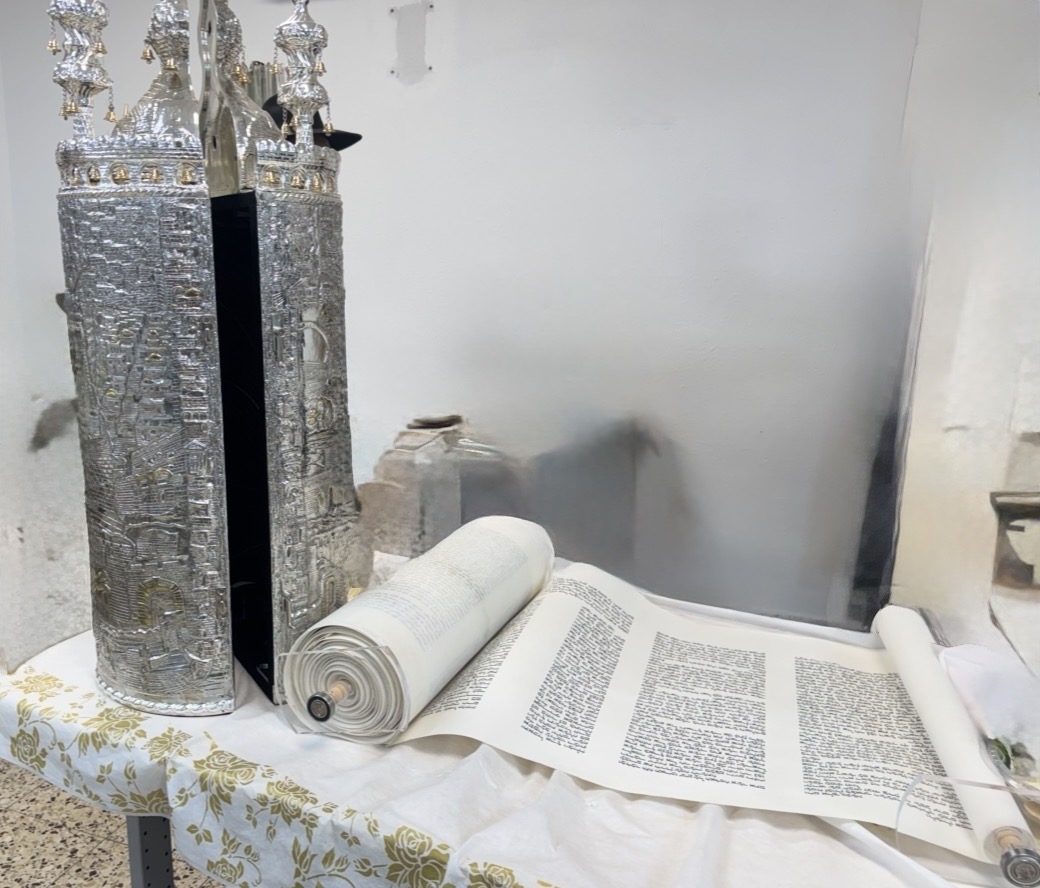
In our last study, we examined the book of Esther. In this study, we will explore the book of Ezra, followed by Nehemiah in our next study guide. These books describe an important period in Israel’s history when God brought His people back from exile, restored the Temple in Jerusalem, and renewed their commitment to His Word.
In most English Bibles, Ezra and Nehemiah appear before Esther. However, the events described in Ezra chapters 1–6 took place before the events of Esther, while Ezra chapters 7–10 and the events of Nehemiah belong to the later period of Persian rule. The books of Ezra, Nehemiah, and Esther help us understand approximately a century of Jewish history during the Persian Empire.
A Historical Timetable
- 539 BC: Cyrus the Great conquers Babylon.
- 538 BC: Cyrus issues a proclamation permitting the Jewish exiles to return to Jerusalem and rebuild the Temple.
- Approximately 538 BC: The first group of exiles returns under the leadership of Zerubbabel and Jeshua (Joshua).
- 520–516 BC: The prophets Haggai and Zechariah encourage the people to resume rebuilding the Temple.
- 516/515 BC: The Second Temple is completed.
- 486–465 BC: Xerxes I, commonly identified as Ahasuerus in the book of Esther, reigns over the Persian Empire. Esther becomes queen and, through God’s providence, the Jewish people are delivered from Haman’s plot to destroy them.
- 458 BC: According to the traditional chronology, Ezra returns to Jerusalem with a group of exiles during the reign of Artaxerxes I (Ezra 7).
- 445 BC: Nehemiah receives permission to travel to Jerusalem and rebuild its walls.
- Approximately 445 BC: Jerusalem’s walls are rebuilt, and the people gather to hear God’s Law and celebrate the Feast of Tabernacles (Nehemiah 6–8).
The book of Daniel describes events beginning around 606 BC and continuing into the Persian period, including the reign of Cyrus.
Between Ezra 6 and Ezra 7, approximately six decades pass in the traditional chronology. During this interval, the events of Esther take place, demonstrating how God preserved His people in Persia before Ezra’s return to Jerusalem.
Prophecy Concerning Cyrus, King of Persia
I want to begin with two remarkable biblical prophecies concerning Israel’s return from exile.
First, the prophet Jeremiah foretold that the Babylonian captivity would last seventy years (Jeremiah 25:11–12; 29:10). The fulfillment of God’s promise begins to unfold in Ezra 1:1, where we read that the Lord stirred up the spirit of Cyrus, king of Persia, to issue a proclamation permitting the Jewish people to return to Jerusalem.
Second, Isaiah prophesied concerning Cyrus by name and described his role in the restoration of Jerusalem and the Temple.
Isaiah 44:28–45:1
Isaiah 44:28 identifies Cyrus as the one who would say of Jerusalem, “She will be built,” and of the Temple, “Your foundation will be laid.” Isaiah 45:1 then addresses Cyrus by name and describes the Lord’s purpose for him.
It is remarkable that Isaiah names Cyrus and describes his role long before Cyrus became king of Persia. According to the traditional understanding of Isaiah’s historical setting, this prophecy was given well over a century before Cyrus’s conquest of Babylon.
We see the fulfillment beginning in Ezra 1:1–3.
Ezra 1:1–3 NASB 1995
Now in the first year of Cyrus king of Persia, in order to fulfill the word of the Lord by the mouth of Jeremiah, the Lord stirred up the spirit of Cyrus king of Persia, so that he sent a proclamation throughout all his kingdom, and also put it in writing, saying:
“Thus says Cyrus king of Persia, ‘The Lord, the God of heaven, has given me all the kingdoms of the earth and He has appointed me to build Him a house in Jerusalem, which is in Judah. Whoever there is among you of all His people, may his God be with him! Let him go up to Jerusalem which is in Judah and rebuild the house of the Lord, the God of Israel; He is the God who is in Jerusalem.’”
Notice the words, “the Lord stirred up the spirit of Cyrus.” God was working through a Persian king to accomplish His purposes for Israel.
This is an important lesson for us: God is sovereign over history. He can work through people, governments, and circumstances to fulfill His Word, even when those involved do not fully understand His purposes.
Could Daniel Have Shown Cyrus the Prophecy of Isaiah?
There is another fascinating possibility to consider.
We know that Daniel studied Jeremiah’s prophecy concerning the seventy years of captivity. In Daniel 9:1–3, Daniel describes how he understood from the Scriptures that the desolation of Jerusalem would last seventy years. He then sought the Lord through prayer, fasting, and confession on behalf of his people.
We also know that Daniel remained an important figure during the transition from Babylonian to Persian rule (Daniel 6:28).
Is it possible that Daniel showed Cyrus Isaiah’s prophecy, which named Cyrus and described his role in rebuilding Jerusalem and the Temple? Could Cyrus have recognized that the God of Israel had spoken about him long before his birth?
This is an intriguing possibility, but Scripture does not tell us that Daniel showed Cyrus the prophecy or that Cyrus was quoting Isaiah when he declared that the Lord had appointed him to build a house in Jerusalem.
Scripture clearly tells us that God stirred Cyrus’s spirit to fulfill His purposes. We can be confident that God’s Word does not fail, and His purposes for Israel are not dependent upon human circumstances.
Ezra: A Key Person in Israel’s History
Ezra was a priest and a skilled scribe who played a significant role in restoring Israel’s spiritual life after the exile.
The Babylonian exile had been devastating. Jerusalem had been destroyed, the Temple had been burned, and many Jewish people had been carried away from their land. Yet God had not abandoned His covenant people. He brought them back to Jerusalem and provided leaders to restore their worship and renew their commitment to His Word.
Ezra’s ministry focused on the Law of God. He understood that the restoration of Israel required more than rebuilding buildings. The people needed to understand God’s Word, obey His commandments, and live as a people set apart for Him.
Ezra 7:6, 10 NASB 1995
Verse 6 describes Ezra as “a scribe skilled in the law of Moses, which the Lord God of Israel had given.”
Verse 10 tells us:
“For Ezra had set his heart to study the law of the Lord and to practice it, and to teach His statutes and ordinances in Israel.”
These words reveal Ezra’s heart and commitment. He did not merely study Scripture as an academic exercise. He determined to study God’s Word, practice it in his own life, and teach it to others.
This is a example that every Christian parent and church leader should seek to follow: study God’s Word, live it in their life, and be faithful to teach it to others especially our children.
Ezra’s commitment to God’s Word and the Development of Synagogue Life
The development of the Jewish synagogue is often associated with the Babylonian exile and the period that followed. Without access to the Temple in Jerusalem, Jewish communities needed ways to gather, pray, learn, and preserve their faith.
We cannot identify a single founder of the synagogue system, and the precise origins of the institution remain uncertain. Nevertheless, Ezra’s ministry provides an important biblical picture of the kind of Scripture-centered communal life that later became central to Jewish religious practice.
In Nehemiah 8, Ezra reads the Law publicly while the Levites help the people understand what is being read. The people respond with reverence, repentance, and renewed obedience.
The synagogue eventually became a vital center for reading and teaching Scripture, prayer, and Jewish community life. By the time of Jesus, synagogues were established throughout the Land of Israel and the Jewish Diaspora.
This history helps us understand the Jewish setting into which Jesus was born. The preservation and teaching of the Scriptures were central to Jewish life, and Jesus Himself regularly taught in synagogues (Luke 4:16–21; Matthew 4:23).
God used Ezra and other faithful leaders to help restore the central place of His Word in the life of Israel.
Did Queen Esther Influence Artaxerxes, King of Persia, to Bless Israel?
Ezra 7:11–28 describes an extraordinary decree issued by King Artaxerxes I. He authorized Ezra to travel to Jerusalem, provided financial support for the Temple, permitted Jewish exiles to return, and gave Ezra authority to appoint judges and teach the Law of God.
This was a remarkable provision for the Jewish people.
Ezra 7:13–16 NASB 1995 describes the king’s permission for the Israelites, priests, and Levites who wished to return to Jerusalem to accompany Ezra, together with silver, gold, and voluntary offerings for the house of God.
The king’s generosity leads Ezra to praise the Lord.
Ezra 7:27–28 NASB 1995
“Blessed be the Lord, the God of our fathers, who has put such a thing as this in the king’s heart, to glorify the house of the Lord which is in Jerusalem, and has extended lovingkindness to me before the king and his counselors and before all the king’s mighty officials. So I was strengthened according to the hand of the Lord my God that was upon me, and I gathered leading men from Israel to go up with me.”
Ezra recognized that the king’s favor was ultimately an expression of God’s gracious hand upon him and His people.
There is an interesting historical question we might consider. Artaxerxes I was the son of Xerxes I, the king commonly identified as Ahasuerus in the book of Esther. Esther had become queen during Xerxes’ reign, and it is possible that she lived into the early years of her stepson’s reign.
Could Esther have influenced Artaxerxes to show favor to the Jewish people and support Ezra’s mission?
It is an intriguing possibility. However, Scripture does not tell us whether Esther was still alive during Artaxerxes’ reign or whether she had any influence on his decision. What the biblical text does establish is that God moved the heart of a Persian king to provide for His people and the restoration of His house in Jerusalem.
This is another powerful reminder that God can open doors through people in positions of authority to accomplish His purposes.
God Commanded Israel to Be a Holy People, Separated unto Him
The book of Ezra also addresses a serious spiritual crisis among the returned exiles. Some Israelites had entered into marriages with people from the surrounding nations in ways that Ezra understood to violate Israel’s covenant obligations and threaten its faithfulness to God.
We need to understand this passage within its biblical and historical context. The issue was not that every foreign person was inherently wicked or that ethnicity itself made someone unacceptable to God. For example, Ruth was a foreigner who adopted God’s ways and not only was accepted by God but was in the lineage of King David. The concern was Israel’s covenant faithfulness and the danger of being drawn into the idolatrous practices of surrounding peoples.
God had repeatedly warned Israel against following other gods and adopting practices that would lead them away from Him.
Ezra 9:11 NASB 1995 recalls the prophets’ warnings concerning the land and the abominations practiced by its inhabitants.
The Hebrew word translated “abominations” is to’evah (תּוֹעֵבָה). It is used in Scripture for practices considered detestable or abhorrent to God, including certain forms of idolatry. Jeremiah 44:3–4, for example, describes the wickedness of those who provoked the Lord by offering sacrifices to other gods.
The concern in Ezra was that God’s people had been called to live differently from the surrounding nations and had nevertheless become entangled in practices that threatened their obedience to Him.
This helps us understand the seriousness of Ezra’s response. He was not merely concerned about outward religious appearances. He was grieving because the people had failed to honor God’s commandments.
Ezra’s Response to Israel’s Unfaithfulness
Ezra 10:3 NASB 1995
“So now let us make a covenant with our God to put away all the wives and their children, according to the counsel of my Lord and of those who tremble at the commandment of our God; and let it be done according to the law.”
This is one of the most difficult passages in Ezra, and it should not be treated as a general instruction to separate from spouses or children because of ethnic background. The passage describes a particular crisis in post-exilic Israel, and its proposed response has been the subject of considerable discussion among biblical interpreters.
The broader lesson is that the returned exiles recognized the seriousness of their covenant disobedience and sought to restore their relationship with God. Their response reminds us that God’s people are called to take His Word seriously, repent when they have been unfaithful, and seek to live according to His revealed will.
What Can We Learn from Ezra?
The book of Ezra teaches several important points.
First, God is faithful to His Word. He had promised through Jeremiah that the exile would not last forever, and He moved Cyrus to permit the Jewish people to return to their land.
Second, God works through human instruments. He used Cyrus to open the way for the return, Zerubbabel and Jeshua to lead the people, Haggai and Zechariah to encourage the rebuilding of the Temple, and Ezra to teach the Law.
Third, God’s people must know and obey His Word. Ezra set his heart to study Scripture, practice it, and teach it. His example reminds us that spiritual renewal begins with a sincere commitment to God and His Word.
Finally, God calls His people to holiness and faithfulness. Israel had been called to belong to the Lord and to live according to His commandments. When the people recognized their unfaithfulness, they were called to repent and return to Him.
The history of Israel’s return from exile reminds us that God’s discipline does not mean He has abandoned His covenant purposes. He remains faithful to His Word and continues to work through people who are willing to obey Him.
May we, like Ezra, set our hearts to study God’s Word, practice it faithfully, and teach it to others—so that our lives will honor the Lord.