AMI Jerusalem Center Newsletter,
September-October 2026
The Days of Awe
By Bruce Larson
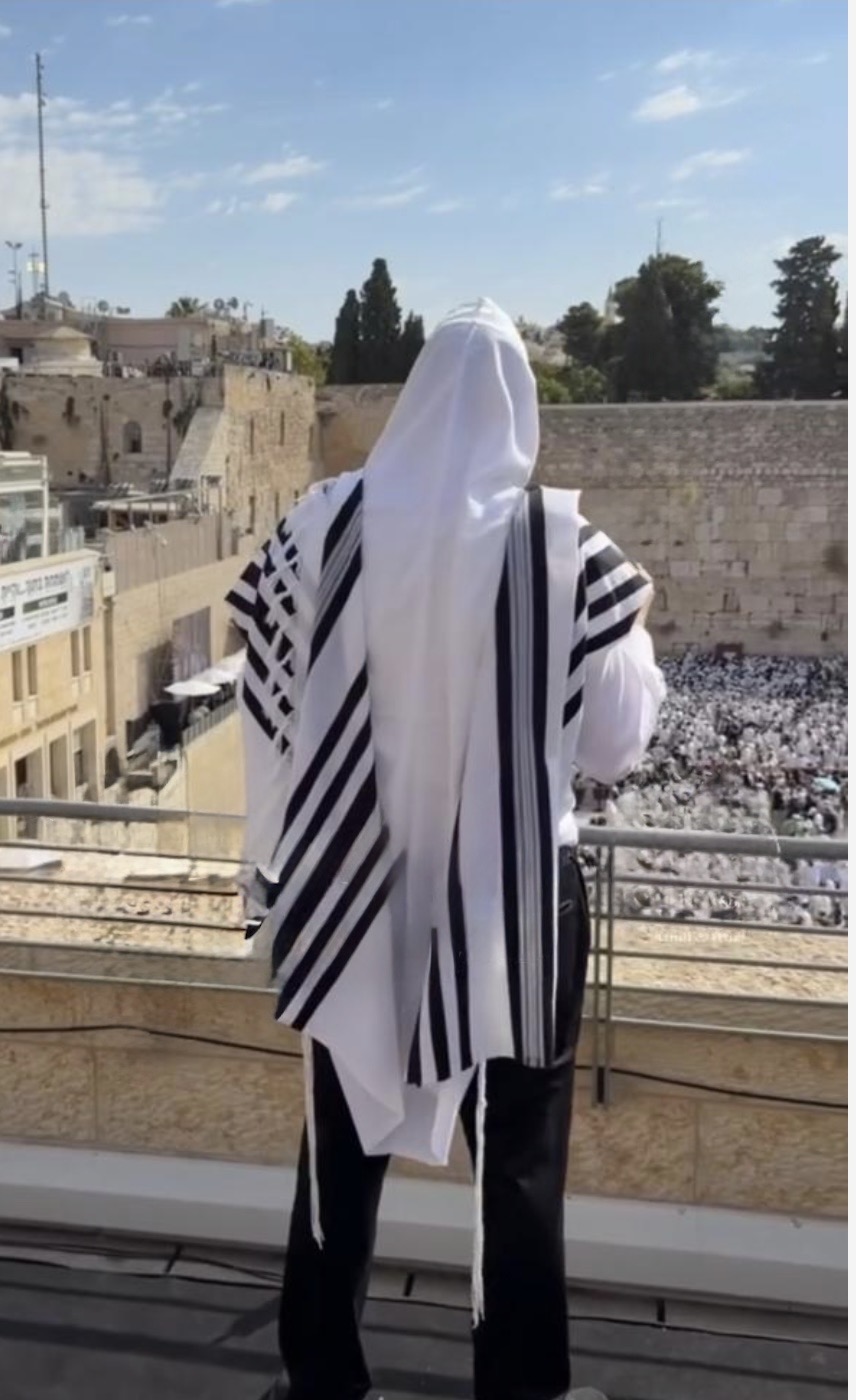
We are in the season of the important biblical appointed times described in Leviticus 23:24–44: Yom T’ruah, traditionally known as Rosh Ha-shanah; Yom Kippur; and Suk-kot. Leviticus 23:24 describes Yom T’ruah as a day of “a reminder by the blowing of trumpets” and a holy convocation. The sounding of the shofar can be understood as a spiritual wake-up call. The days between Rosh Hashanah and Yom Kippur are traditionally known as the Ten Days of Repentance (Aseret Yemei Tes-huvah) and also as the Days of Awe (Yamim Nora’im).
The Hebrew concept of “awe” is expressed by the word yirah, which can be translated according to context as fear, reverence, or awe. Deuteronomy 10:12 says, “And now, Israel, what does the LORD your God require from you, but to fear the LORD your God, to walk in all His ways and love Him, and to serve the LORD your God with all your heart and with all your soul.” The word yirah in this passage carries the idea of reverence and a profound awareness of God. It does not mean to be frightened of God. We see a helpful distinction in Exodus 20:20, where Moses tells the people, “Do not be afraid; for God has come in order to test you, and in order that the fear of Him may remain with you, so that you may not sin.” The passage distinguishes being frightened from being in awe of God.
As Israel came out of Egypt, they witnessed God’s awesome power. Moses declared in Deuteronomy 10:21, “He is your praise and He is your God, who has done these great and awesome things for you which your eyes have seen.” The Hebrew word translated “awesome” in this verse comes from the same root and is associated with yirah. God’s power is not separated from His love. He demonstrated His mighty power on behalf of a people He had chosen and loved. Deuteronomy 4:37 says, “Because He loved your fathers, therefore He chose their descendants after them. And He personally brought you from Egypt by His great power.”
Another important part of Deuteronomy 10:12 is that God calls Israel not only to fear Him but also to love Him with all their heart and soul. In verse 15, Moses says that the LORD “set His affection” on Israel and chose them. The God whom Israel is called to revere is also the God who loves, chooses, delivers, and remains faithful to His covenant people.
Deuteronomy 6:12–13 gives Israel a serious warning not to forget the LORD after entering the Promised Land. They were to fear Him, serve Him, and remember that He alone is God. The message is not limited to the Ten Days of Awe. It is a call to a daily living reality of God’s presence, power, and faithfulness that results in worship and obedience.
God is not merely a subject to be studied as a historical figure. He is the living God who cares about His people and remains faithful to His covenants. The people of Israel were eyewitnesses of God’s miraculous deliverance from Egypt. Yet when they entered the wilderness and faced hunger, thirst, and uncertainty, they sometimes struggled to trust that God would provide for them. The same thing can happen to us today. We can experience God’s faithfulness and then, when new difficulties arise, forget what He has already done.
The Christian world needs this spiritual awakening today. We may intellectually know that God is all-powerful, yet we also need a present and living awareness of His power, holiness, faithfulness, and the depth of His love for us. Jesus warned His followers to remain spiritually alert: “Therefore be on the alert, for you do not know which day your Lord is coming” (Matthew 24:42).
Christians can come to Israel, be eyewitnesses of God miraculously fulfilling His Word, and know God’s faithfulness to His covenants with Israel. When we see the continuing story of Israel through the lens of Scripture, we are reminded that God’s promises are not empty words. His Word is our truth and our authority. The culture around us continually attempts to define our moral compass, identity, and truth, but it is the Bible that should speak to us, to teach us, correct us, and establish what is true. As Jesus said, “Your word is truth”
(John 17:17).
This truth sets us free to love God with all our heart and to seek His will in our lives. It also helps us recognize His faithfulness in the world around us and to pray with confidence for His purposes concerning Israel and the nations.
We all understand the seriousness of the current situation in the Middle East and the importance of praying for Israel. I also want our AMI Center friends to know that we are working toward several tours to Israel in 2027. We are also praying about opportunities to travel to Europe, the United States, Brazil, and Mexico to meet with pastors and their churches. Our desire is to help people around the world understand God’s covenants with Israel and to see how, in His faithfulness and love, He continues to fulfill His Word.
Please also pray with us that the major airlines will resume regular service to Israel so that people from the nations can once again travel freely to the land of Israel. Scripture looks forward to a day when “many nations will come and say, ‘Come and let us go up to the mountain of the LORD, to the house of the God of Jacob; that He may teach us about His ways’” (Micah 4:2).
May these Days of Awe be a call to us to awaken spiritually to who God is—to His holiness, power, covenant faithfulness, and love—and that awareness lead us to repentance, worship, and renewed trust in Him.
So, You Don’t Believe in Biblical Prophecies?
This May Come Back to Bite You!
By Daniel Gwertzman
“For thus says the Lord of hosts, Once more in a little while, I am going to shake the heavens and the earth, the sea also and the dry land. I will shake all the nations; and they will come with the wealth of all nations, and I will fill this house with glory, says the Lord of hosts.” (Haggai 2:6-7)
Israel is a small country of 10 million people. I know of no one living here who wants to dominate the world. Yes, we want to live at peace with the nations of the world and trade with them. That is true, and this also includes the people of Iran, which is a country of 90 million people. The current government in Iran wishes to annihilate our country and wipe out the Jewish People wherever they are found, and yes, also destroy the West. This makes it difficult to live with them and their proxies. They have already shown their hostile intent by attacking us with ballistic missiles. In addition, they have already attacked 12 countries in this region. Had they developed a nuclear weapon, they already have the range with their ballistic missiles to reach Europe, so who poses the real danger to the world?
There is an expression in English: what goes around comes around. Put simply, there is a consequence to our actions; this is the Biblical principle found in the Book of Genesis.“And I will bless those who bless you, and the one who curses you I will curse. And in you all the families of the earth will be blessed.” (Genesis 12:3)
But in reality, what can Modern Israel do about countries that seek to blame Israel for genocide, such as Spain and Ireland, who also wish to label products coming from beyond the green line and subject Israel to boycotts? Actually, the answer is very little. Does that mean this particular form of anti-Semitism goes unpunished? The answer is no. The actual one doing the cursing will be God, so what we are talking about is divine justice. Those who engage in the Socialism of Fools, which is anti-Semitism, do not take the Biblical promises seriously, so for them all things are permitted.
An answer may have come from above on July 30, 2026, when between 50,000 and 60,000 people from Morocco began pouring across the Spanish border into the enclave of Ceuta, most of them young men. Dozens of people drowned at sea or were caught in the chaos. Madrid had to deploy additional security forces to contain what became the largest migration emergency in the history of the enclave. Why are people crossing the border? It is because it represents entry into a world of greater opportunity.
Africa is by far the youngest continent on earth, with a median age of 19 years compared with more than 40 in Europe. Europe and East Asia struggle with aging populations. A young population is only an advantage if they believe they have a future where they are. That is why this summer, thousands of young Africans chose the dangerous crossing over staying home.
Some swam through waters; others climbed fences; some risked death, and many knew they could be deported. What led these young people to try their luck? Now forget the conspiracy theories. The trigger may have been rumors spreading only after the Spanish Supreme Court ruled concerning migrants intercepted at sea, that they could not be turned back. Once you open the door, it is hard to close it!
Spain’s Prime Minister Pedro Sánchez, when he traveled to Ceuta, was greeted with insults from protesters. He is currently under investigation in a case involving receiving bribes from the former Maduro government in Venezuela. Italy said it was suspending the European Union Border Free Schengen arrangement with Spain. This will affect people traveling by plane and boat between the two countries. This raised concerns all over Europe about Spain’s migration policies.
Before this happened, Spain and France battled major wildfires. Over 75,000 people in Spain have been evacuated from their homes, and around 30,000 more have been ordered to shelter in place. About 45,000 hectares (111,000 Acres) have burned. More than 150,000 hectares have burned across Spain since January, which is six times the area destroyed during the same period last year. What Sanchez is calling for are policies grounded in climate science. Pope Leo had a better idea, calling for everyone to pray for those affected and for the rescue workers engaged in relief efforts.
Ceuta has a population of only 84,000 residents. This crisis has prompted Juan Carlos Girauta, a Spanish member of the European Parliament, to make a direct appeal to Prime Minister Benjamin Netanyahu “to speak out in defense of Spain’s territorial integrity because the Spanish government is not Spain!”
In Ireland, we have another country which seems obsessed with Israel. In August, they purchased a 53 million Euro plane, primarily to transport the Taoiseach (Prime Minister) and other ministers and officials on state business, but dropped the Falcon Eye Technology co-developed by Dassault Falcon and Israeli Defense giant Elbit Systems, which is essential for aircraft to land in foggy weather.
The Republic of Ireland does not want to award Israeli companies defense contracts. This is a big win for antisemitism. Ireland suffers from foggy weather. They chose to pull out of the European Song Contest because Israel was part of it. Now they are endangering their own leaders because irrationality is preventing them from seeing clearly.
A joint written submission presented to the Irish Parliament’s Joint Committee on Foreign Affairs and Trade by the Ireland Israel Alliance (IIA) and U.K. Lawyers for Israel (UK LFI) raises legal challenges regarding proposed legislation concerning Trade. The submission argues that the legislation is incompatible with both European Law and the General Agreement on Tariffs and Trade (GATT), published in June 2025. The Irish Government’s Israeli Settlements (Prohibition of Importation of Goods) Bill seeks to ban imports from Israeli Settlements in the West Bank and East Jerusalem, framed as a response to the July 2024 International Court of Justice advisory opinion. This is a unilateral Irish measure that is incompatible with the EU’s Common Commercial Policy. The government of Ireland lacks any prohibitions on imported goods from Western Sahara and Northern Cyprus territories under unlawful occupation. The Irish Government itself invests in companies that operate in these territories, and the Irish Stock Exchange facilitates investments in such companies. The report argues that far from helping the Palestinians, the legislation harms them economically. This prevents Palestinians from being employed in relatively well-paid jobs, actively promoting mutual understanding between their Palestinian and Israeli staff. Thus, Irish harassment of Israel is contributing to normalizing political violence and radicalizing a generation against Israel’s Founding Principles.
Does religious belief protect mental health in secular societies? Do religious people cope better with stress, trauma and the temptations of the digital age than non-believers? That is the subject of a new study by the Hebrew University of Jerusalem. They found that answers lie in the psychological resources, mindsets, and habits that come from religiosity.
This goes back to central elements of Biblical belief such as seek, and you shall find, and knock, and it will be opened unto you. This is in fact what draws people to Jerusalem as a spiritual center. This is in fact the basis of the work of the AMI Center in bringing together Jews and Christians to explore shared beliefs and the understanding of Biblical Prophecies.
This study published in the Journal of Mental Health and Addiction examined the responses of 3000 Israeli Jewish adults collected in February 2025 on how religiosity, meaning in life, social media use, and exposure to disturbing online content relate to addiction and mental health. Participants represented a cross-section of Jewish society, including secular, traditional, religious, and haredi (Ultra-Orthodox) communities. Religious participants reported lower rates of substance abuse, symptoms of depression, anxiety, and post-traumatic stress, and behavioral addictions compared to secular respondents.
The protective effect of religion is that it can help people cultivate meaning in life and reduce harmful digital exposure. What religious life provides is that life has meaning and purpose, shared norms, and social support within religious communities.
Religious people tend to have more children, and families that pray together tend to stay together. Religious practices themselves present meaning while performing them. Attendance at prayer, communal meals, and life cycle events bind people together. People suffering from depression, anxiety, or addiction may withdraw from religious communities. Blessing other people also binds us together.
At the AMI Center, we reach out and help others such as the Bnei Arazim Child Care Center and the Shiloh Israel Children’s Fund, dedicated to healing the trauma of child victims of terrorism. When groups come here, part of the time is spent volunteering to help the less fortunate in society, whether packing food or helping to pick crops. We also help individuals
in need and provide learning experiences that bind people to shared Biblical values.
I want to thank all our supporters around the world who make this work possible through their generosity and prayers. I look forward to seeing you soon in Jerusalem. With our dear Lord, all things are possible. The most important is hope, faith, and the blessings of the Word, which will bring revival and the fulfillment of His Word. Trust in the Lord and your faith will be renewed.
“Do nothing from selfishness or empty conceit, but with humility of mind regard one another as more important than yourselves.” (Philippians 2:3)
Archaeological Discoveries that are Proving the
Truth of God’s Word to Israel
By Daniel Gwertzman
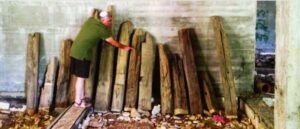 It seems that almost every day something new is being discovered in Israel which validates the Bible or sheds light on the Jewish connection to the Land of Israel. Massive wooden beams that were charred by the fire that destroyed Jerusalem and the First Temple were unearthed in Jerusalem. This happened at the Jerusalem Walls National Park in the City of David, as was reported by the Israel Antiquities Authority (IAA) in July. The First Temple was built by King Solomon and was destroyed in 586 BC by Nebuchadnezzar II, King of the Neo-Babylonian Empire.
The IAA and Tel Aviv University discovered the burnt beams inside a building that had collapsed in the fire. It seems these beams served as the roof of an inner courtyard building from the First Temple Period. Plaster had melted off the building’s walls, sealing the wood beneath it, which likely preserved the beams for 2,600 years.
The IAA’s Dr. Johanna Regev said, “It is very rare to find wood with such a large number of growth rings.” This enables higher dating resolution. Jerusalem’s returning residents, as they began to rebuild, probably made a deliberate decision to preserve the memory of the destruction by leaving behind the remains. Heritage Minister Amichai Eliyahu said, “Jerusalem’s soil continues to provide tangible evidence of the city’s ancient past.”
A rare Judean pillar figurine mold from the First Temple Period was recently found during archaeological excavations in the Old City of Jerusalem by the IAA. This is the first ever mold found in Israel to produce such figurines dating back to the First Temple Period. The mold that was used to cast the face of the female figurine was found within the Tower of David Museum during excavations ahead of construction to produce the new Schulich Wing of Archaeology, Art and Innovation.
The fact that Judean pillar figurines have been found in almost every excavation conducted in Jerusalem and the surrounding areas has not yet been fully understood. However, they seem to be objects of everyday use, and this is the subject of scholarly debate. According to Heritage Minister Amichai Eliyahu, “This small piece of pottery tells the story of the beliefs, customs and spiritual challenges that characterized the capital city in ancient times.”
We hope to bring you more insights from Archaeology in future issues of our newsletter.
“Cry aloud and shout for joy, O inhabitant of Zion, for great in your midst is the Holy One of Israel.” (Isaiah 12:6)
*Photo credit: Matti Friedman/Times of Israel