Friday, May 15
I arrived at the AMI Center and was greeted very warmly by Bruce Larson, President of the AMI Center, and two very lovely ladies, Yoshie and Ingrid, who are both an integral part of the Center. The other members of the tour were Mona Balogh, Dennis and Lynn Fisher.
That evening, we all participated in a Shabbat meal, sharing our hearts and expressing great expectation for what the Lord had in store for us in the days ahead.
Saturday, May 16
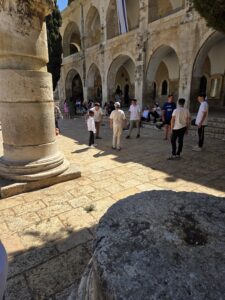 This day was a complete tour of the Old City. One of the highlights, and what I felt was a fulfillment of prophecy, occurred when we visited Rothschild Square in the Jewish Quarter. There we saw children playing in the streets, reminding me of the prophecy in Zechariah 8:5: “The city streets will be filled with boys and girls playing there.”
We ended the evening with another Shabbat dinner, followed by Scripture reading and heartfelt fellowship.
Sunday, May 17
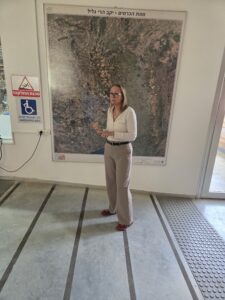 This was the official beginning of our Solidarity Tour, and for the first time I had the opportunity to meet Rabbi Mordechai Weiss. He is a wonderful man with a great sense of humor and an impressive knowledge of both Israel’s ancient history and current events. We then headed north toward the border between Israel and Lebanon. This day held many experiences, and one of them was meeting a lady from the winery we visited on the Lebanon border. She told us her story of moving her family there to become a part of the community and to work at the winery. When the war started, the community was evacuated, many lost their homes, and 30% of the vineyard was destroyed! Now that the war has subsided somewhat, they have moved back to their homes and continue to pick up the pieces of their lives and move forward. These people are very brave and determined to live where God has placed them in the land! (Ezekiel 34:28-30)
Another experience of this day was when we headed up to the northernmost point of Israel near Lebanon. We drove up to a lookout point, and Mordechai began to explain to us what we were seeing. There were many homes and buildings that had been destroyed by the IDF because they were Hezbollah strongholds. As we continued looking at the countryside, we heard some very loud booms and then saw an area explode as the IDF targeted more Hezbollah areas. Just when I thought the fireworks were over, two rockets fired from an area below us and hit a Hezbollah drone! This was a real-time example of Israel’s “Iron Dome.” The day ended with us going to the kibbutz and the hotel where we would be staying for the next two nights.
Monday, May 18
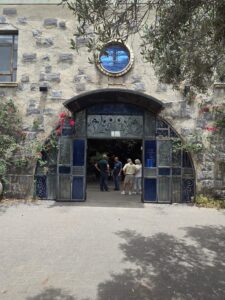 We started today with a tour of the Golan Heights Winery, which is one of the best-known and largest wineries in the Golan region. Our next stop was one of my favorites. We went to the olive press of Golan Heights, which produces a wide range of virgin olive oils and also manufactures an oil-based skincare and cosmetic line. We met the owner, Avner Talmon, and he told us the story of how he discovered the healing properties of the products they produce. It was really fun tasting all the different olive oils and trying the different skincare products.
Tuesday, May 19
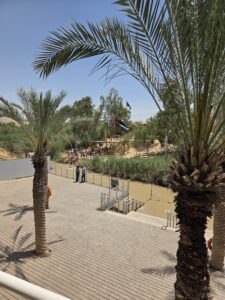
Today began with our heading toward the Jordan River and the facility that has been built to allow people to experience and see this historic river. It was here that Joshua was commissioned to lead Israel into the land of Canaan, and where the waters of the Jordan were parted before them as they entered the Promised Land.
(Joshua 1:2–4; Joshua 3:14–17)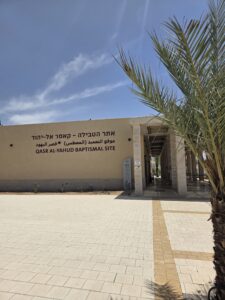
This is also the area where John the Baptist preached a baptism of repentance and where Jesus (Yeshua) was baptized. (Matthew 3:1–6; Matthew 3:13–17)
Of course, many other significant events took place in connection with the Jordan River. It was here that twelve stones were taken from the river as a memorial of God’s faithfulness. Elijah parted the Jordan before being taken up into heaven, and Elisha later parted it as well. It was also in the Jordan River that Naaman was cleansed of leprosy after obeying the word of the prophet. There are undoubtedly many more events of great significance associated with this river throughout the Scriptures. (Joshua 4:1-9; Numbers 34:10-12; 2 Kings 2:7-8; 2 Kings 2:13-14;
2 Kings 5:10-14)
 I can’t finish this day without mentioning our next stop at our tour guide Rabbi Mordecai’s home in Mitzpe Jericho. He has a beautiful home, and we were privileged to meet his wonderful wife. As we entered their home, we were warmly greeted, and she told us that she had prepared a small snack, thinking we might be hungry. This was no small snack! A large table was full of homemade dishes that were very tasty! Mordecai and his wife proceeded to tell us the story of how they met and how they ended up in Israel. This was a wonderful way to end the day and really get the heart of a Jewish family!
Wednesday, May 20
Today, for me, was one of the highlights of the tour. We went to where they have discovered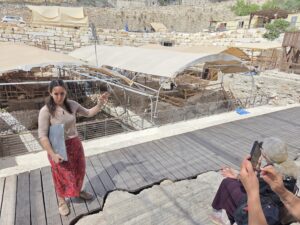 the original City of David, the Pool of Siloam, and the road up to the Temple Mount. We began our time in a wonderful area covered in olive trees and picnic tables, where we met our tour guide, Shira Allen. This young lady was very passionate about Israel and the Jewish heritage. She was so knowledgeable about the events leading up to the discovery of the City of David, the Pool of Siloam, and the Pilgrim’s Path leading to the Temple Mount. Her passion made the whole tour very exciting and real to me. We began our tour seeing many areas of the digs where they are discovering the City of David, and the excavation is quite immense. There are areas everywhere where workers are either welding reinforcements for the excavation under the mountain or continuing to dig up more of the city. It was amazing to me that all of this is being done under the homes of people who live on the mountain! Yes, that’s right! I asked about the metal doors along the path as we descended the mountain, and Shira explained that the heart of the Jewish people is to honor their past while also realizing that they, too, are living as God’s people today and making history. It is important to them not to disturb the people living there, so they dig under their homes to find their ancient heritage. Finally, we came to the bottom of our descent and to the Pool of Siloam. This is where the people of Israel would come three times a year (Pesach/Passover, Shavuot/Feast of Weeks/Pentecost, and Sukkot/Feast of Tabernacles/Booths) for the biblical feasts to worship the Lord. This was a command by the Lord that all the males would appear before Him. (Exodus 23:17)
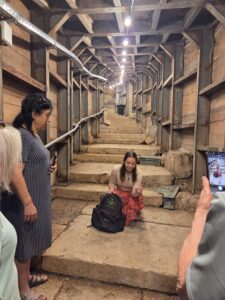 Now came one of the most exciting times of my life! We began our walk on the Pilgrims’ Road up to the Temple Mount. This was an awesome experience, knowing that we were walking on the same stones that Jesus, the apostles, and the people of Israel walked on after they had cleansed themselves in the Pool of Siloam. The amazing feat of tunneling under this mountain and the incredible work that was done to build the infrastructure was something in itself to behold.
As we began our walk up the road, Shira explained to us that although the exposed portion of the road was about 12 to 15 feet wide, its full width was probably closer to 35 feet to accommodate the thousands of Jews who traveled it each day.
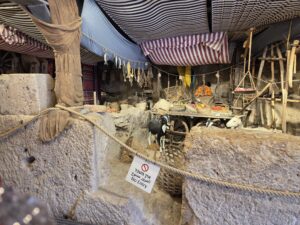 As we walked up this road, Shira showed us the different areas on the sides that were used as shops to sell pilgrims the things that they might need.
About halfway up the road, we came to a stone podium that our guide explained was used by people who had important messages to share with the public. They would stand on this platform and call out to those passing by. For example, if someone had found a lost item, Jewish law and custom required them to make every effort to locate its rightful owner.
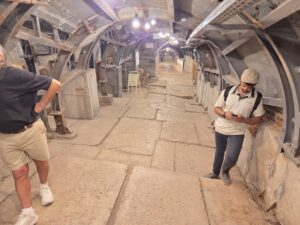 As Shira continued explaining its purpose, she said, “Just imagine that Jesus and the apostles may have stood on this very podium and spoken to the people as they passed by!” The thought of standing in a place where such events could have taken place made the experience even more meaningful and unforgettable.
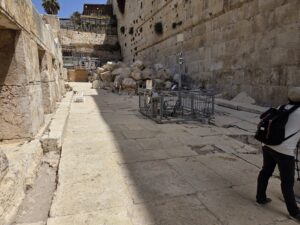 As we began our final ascent to the Temple Mount, I truly felt that something had been imparted to me that I would never forget. I looked back at the path we had walked and wanted to etch the experience deeply into my heart forever.
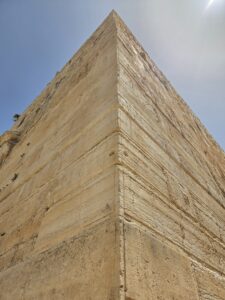 As we came out of the tunnel, we began to see the Temple Mount and the towering walls that once surrounded the Temple. To our right were the massive walls, and to our left were the stone shops where merchants sold the various animals used for sacrifices to the Lord.
It was an awe-inspiring sight to see how majestic these ancient walls were. Shira pointed out the large stones scattered across the ground and explained that they had originally been part of the upper portions of the Temple walls. When the Romans destroyed the Temple in 70 AD, they cast these stones down below. This was done, in part, to retrieve the gold that had melted into the cracks and crevices of the stones during the intense fire that consumed the Temple.
Shira also explained that the original walls were probably 30 to 40 feet higher than what we see today. Standing there and imagining the grandeur of the Temple in its original state made the scene even more impressive and unforgettable. We ended our day helping prepare boxes of food for the IDF families that have lost a husband, wife, son, daughter, or other relative to the war. This was done at a “Tachlit.” Basically, it is a non-profit whose whole purpose is to help those families in need. Those we met there are volunteers who spend their days giving their time and effort in their drive to be a blessing to the IDF.
Sunday, May 24
Just to be clear, I missed three days of the tour because I came down with a cold and did not want to expose anyone else to it. That is why there is a gap in the timeline.
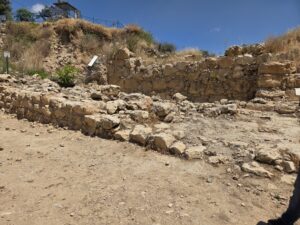 Another memorable part of our trip was our visit to the ancient city of Hebron (Kiriath-Arba; Joshua 14:15). This is the city that Caleb received as his inheritance, as Moses had promised him (Joshua 14:7–9, 14).
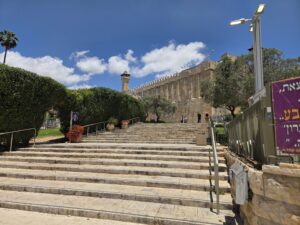 Other notable events took place in this area as well. Abraham purchased the Cave of Machpelah from the sons of Heth (Genesis 23). Abraham, Sarah, Isaac, Rebekah, Jacob, and Leah were buried there. There is a building that King Herod the Great built over this cave, and it is still standing and used as a place of prayer and homage to these great patriarchs today! David also reigned in Hebron for seven and a half years before moving his capital to Jerusalem (2 Samuel 2:11; 5:5). Here are some of the original walls that protected the city of Hebron.
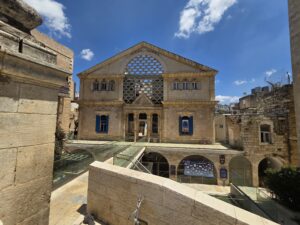 At the end of our day, we visited a very important historical landmark called Beit Hadassah. This building was constructed in 1893 by the Jewish community of Hebron. It served as a medical clinic that provided free treatment to both Jews and Arabs.
In 1929, an anti-Jewish movement culminated in a brutal Arab pogrom against the Jewish community. Sixty-seven Jewish men, women, and children were murdered. Adding to the tragedy, the British Mandate government responded by evacuating and ultimately expelling all of the Jewish survivors from Hebron.
In 1931, Jews attempted to return to the city but were once again forced to leave. Even after the Six-Day War, Jews faced significant restrictions regarding their return to Hebron because of the reluctance and uncertainty of the Israeli government concerning Jewish resettlement there.
Beit Hadassah remained abandoned until 1979, when a small group of Jewish women and children secretly moved into the building and lived there under very difficult conditions. During this period, Arab attacks continued, including one in which six Jewish men were murdered in front of the building.
Eventually, the Israeli government recognized the Jewish community’s right to return to Beit Hadassah and gave its support to the renewal of Jewish life in Hebron.
This was another amazing story of men and women who were willing to give their lives for what they believed God had given them as their inheritance.
Monday, May 25
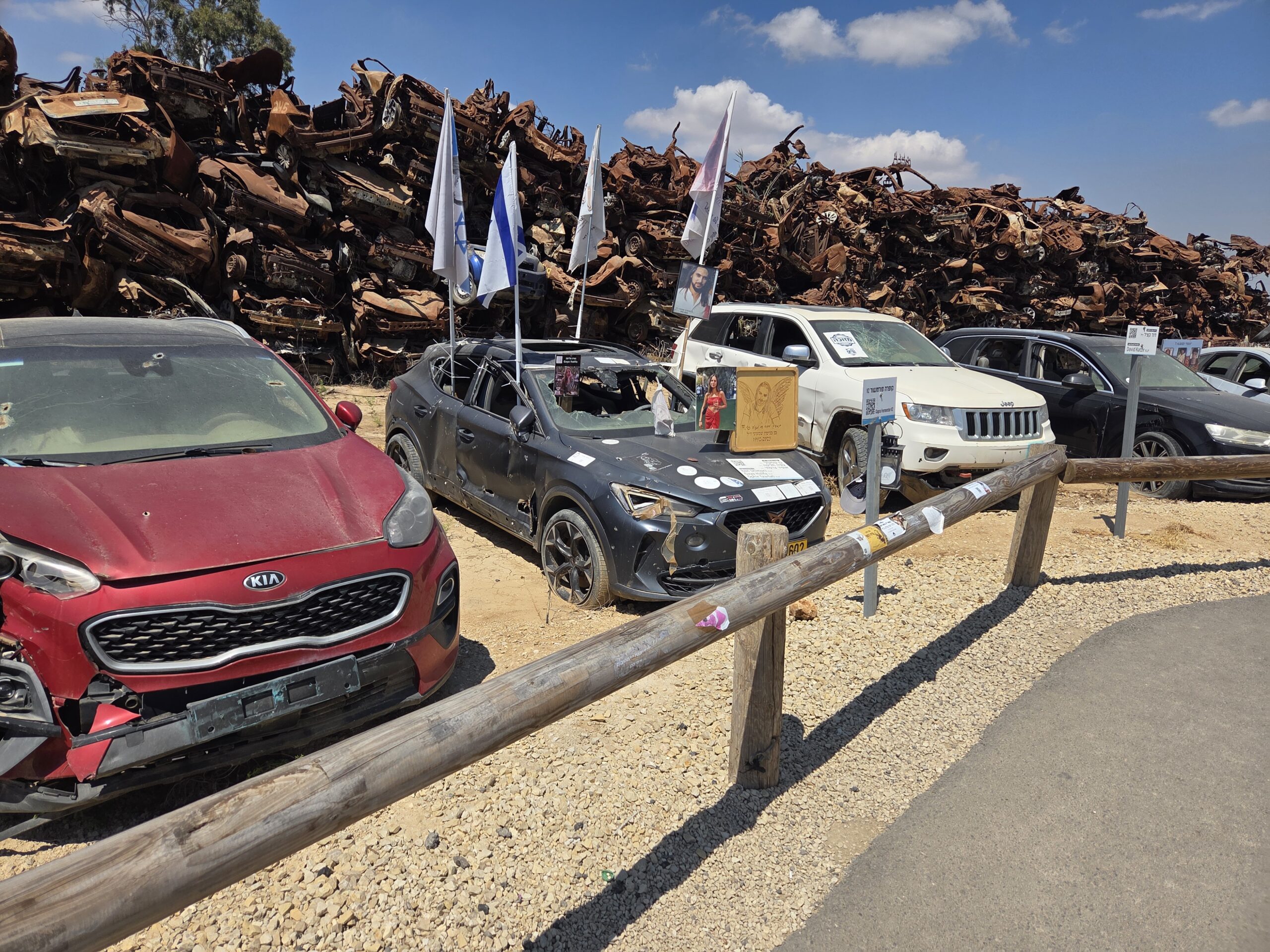
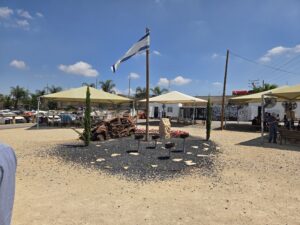 Today, we headed toward the Gaza border to visit several sites connected to the October 7th massacre. The first place we visited was known as the “Car Graveyard.” After October 7, authorities collected more than 1,500 damaged, burned, and bullet-riddled vehicles from roads, kibbutzim, and the Nova Music Festival area. Many of these vehicles were brought to a field near Tkuma, creating what became known as the “Car Graveyard” or “Car Wall.” These vehicles now serve as both physical evidence of the attacks and a memorial to those who were killed, wounded, or taken hostage.
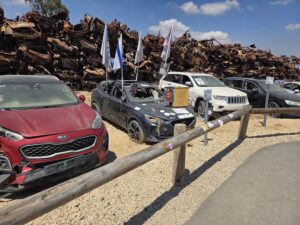 Throughout the Gaza Envelope, many memorial sites now display individual vehicles—cars, motorcycles, bicycles, and scooters—each connected to the story of a victim, survivor, or hostage from that tragic day. Seeing these vehicles firsthand was a sobering reminder that every twisted piece of metal once belonged to someone whose life was forever changed on October 7.
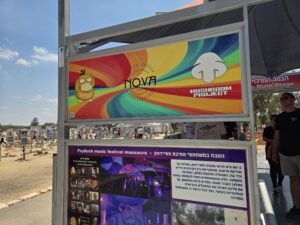 Next, we visited Nova, the site where so many young people were killed during the music festival that was taking place on October 7. This visit gave me a much deeper understanding of just how horrific this massacre truly was. There were hundreds of memorials and stories honoring those who lost their lives, and it made a profound impact on me.
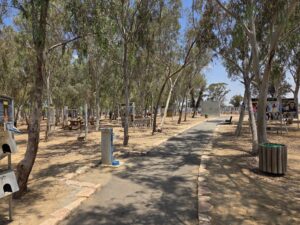 As I walked around the memorial area, I was approached by four young men who asked if they could use my phone to watch some of the videos from that day. By scanning QR codes located throughout the memorial, visitors could hear and see some of what these people experienced. The young men explained that they had lost friends there and wanted to view a few of these videos. Of course, I said yes and helped them access several of them. They were very thankful, and before they left, I said to them, “You look like you’re about the age of entering the IDF yourselves.” They all looked at me and replied, “Yes, actually, next week we begin the cadet phase before starting our two years of military service.”
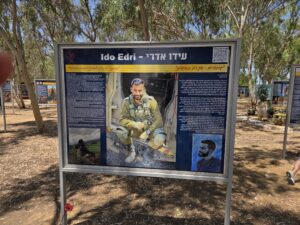 As they walked away, I couldn’t help but think about the weight these young men carried. Having lost friends at Nova and now preparing to serve their country, they represented both the pain and the resilience that I witnessed throughout Israel during this trip.
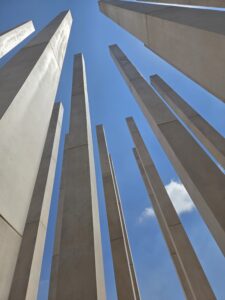 Our next stop was the city of Sderot. Here we visited the site of the police station that had been destroyed by the terrorists, where many lives were lost. Once again, it was very inspiring to see how the Jewish people have honored those who gave their lives. The stories we heard were remarkable and demonstrated extraordinary courage, heroism, and sacrifice.
A memorial has been erected consisting of concrete pillars, each engraved with meaningful sayings and words of remembrance. There are also plaques that tell the story of each individual and provide a glimpse into who they were and the lives they lived.
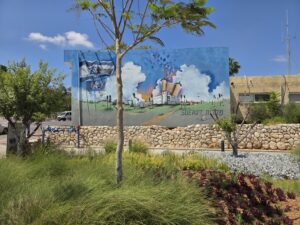 The impact of these sites and the stories behind them will remain with me forever.
Our last stop of the day was an overlook along the Gaza border. We climbed a tower and crossed a bridge to reach the observation point. From there, we were able to look out over the Gaza Strip and gain a better understanding of the geography and proximity of the communities that had been attacked.
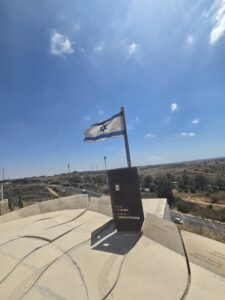 Our guide, Rabbi Mordechai Weiss, explained that the IDF had secured much of the Gaza Strip and that, although a cease-fire was in effect at the time, Hamas had shown no willingness to disarm. He shared that Hamas and other terrorist organizations operating in Gaza remain committed to the destruction of Israel and the Jewish people, making lasting peace difficult to achieve without addressing those ongoing threats.
Standing there and looking across the border brought into focus many of the events we had learned about throughout the day. It was a sobering reminder of the challenges Israel continues to face and the importance of praying for peace and security for all those who live in the region.
Tuesday, May 26
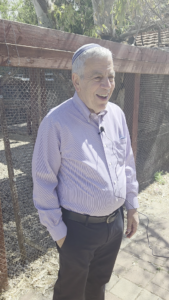 This was the last day of the Solidarity Tour and was one of the most impactful days for me. The day began with a drive to Shiloh and a visit to the children’s schools that have been established for those who have been traumatized by the war. We met with the founder of these schools, David Rubin (pictured left), and heard his story of how he received the vision to build them and all that he went through to bring that vision to fruition. Both David and his three-year-old son were victims of a terrorist attack and survived, ultimately fulfilling this tremendous vision.
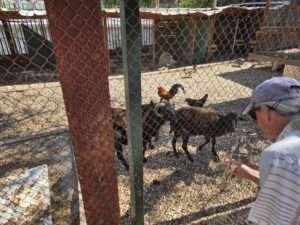 The first school we visited was the boys’ school. It was filled with young children running everywhere, playing together, and enjoying their day. David explained how many of these children have lost parents, siblings, friends, or other relatives in these horrific attacks and must now recover from the trauma they have experienced. The schools provide a variety of therapeutic programs designed to help them heal. A petting zoo, music therapy, art therapy, and many other activities have been developed and have proven to be very effective in helping these young people open up, process their experiences, and begin the healing journey.
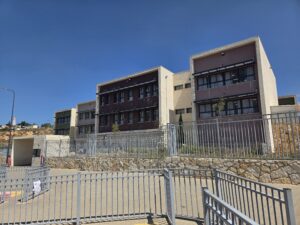 The next school we visited was the girls’ school. Because it was built after the boys’ school had already proven how effective David’s programs and methods were, it received much greater financial support, allowing them to construct this beautiful facility.
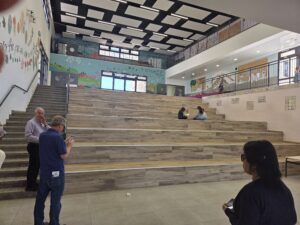 As we entered the school, we were once again greeted by many young girls who were simply enjoying themselves. When they saw us, they welcomed us with waves and songs. We walked through the school and visited the various rooms that had been created to meet the children’s unique needs. Each area provided a different environment designed to help them heal and grow.
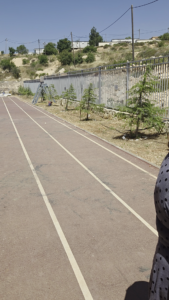 One area that particularly touched me was the outdoor garden. As we walked around to the back of the school, we were shown a long row of trees that the children had planted. It was explained to us that each one of these trees represented a fallen IDF soldier. Once again, this was another example of the heart of the Jewish people and how they teach their children to honor the men and women who sacrifice to protect them.
We also heard from some of the people David has hired to help fulfill this vision. Their stories of why they chose to live in this area and their dedication to helping these children heal were both inspiring and moving.
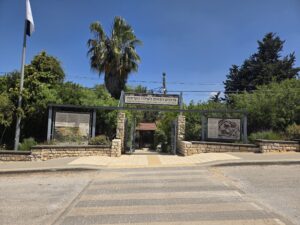 In the afternoon, we went to Shiloh’s archaeological site, where the tabernacle was located for 369 years. This is the site where both Eli the priest, ministered (1 Samuel chapters 1–4) and where Hannah prayed for a son (1 Samuel 1:12–17). Samuel grew up here at the tabernacle and became Israel’s prophet and priest (1 Samuel 3:4–10).
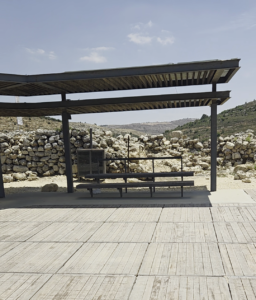 A few things that Rabbi Mordechai Weiss said about this site of the tabernacle really stuck with me. Many archaeologists agree that the size of this site is exactly the size described in Scripture. Also, when the site was discovered, many broken clay vessels were found—far more than would normally be expected in a small community of this size. It was explained to us that when a sacrifice was brought to the tabernacle in a clay vessel, the vessel became “holy” and could no longer be used for any other purpose. Therefore, it was broken (Leviticus 6:27–28). This explains why so many broken vessels were found at this site.
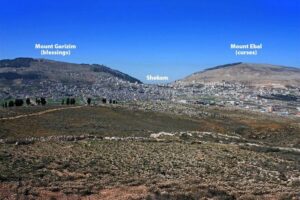 We also went to an area where archaeologist Adam Zertal believed he had discovered Joshua’s altar on Mount Ebal (Deuteronomy 27:4–8). There were many reasons he believed this was Joshua’s altar: the structure was built of uncut stones, consistent with biblical instructions; excavations uncovered bones from animals permitted for sacrifice; and the structure appears to have been approached by a ramp rather than steps, which resembles the requirements found in Exodus 20:26.
This was also the location where Moses instructed the people that a covenant ceremony was to be held on two mountains, Mount Ebal and Mount Gerizim. “And it shall come to pass, when the LORD thy God hath brought thee in unto the land… that thou shalt put the blessing upon mount Gerizim, and the curse upon mount Ebal” (Deuteronomy 11:29).
After entering Canaan, Joshua carried out Moses’ instructions. Joshua built an altar on Mount Ebal, offered sacrifices, wrote the Law on stones, and read the blessings and curses before all Israel (Joshua 8:30–35).
As I reflect on this Solidarity Tour, I realize that I received far more than information about the history of Israel. I witnessed the faith, courage, resilience, and determination of a people who continue to build, serve, and persevere in the face of tremendous challenges. Walking the land of the Bible, seeing the places where so many events of Scripture unfolded, and meeting the people who call this land home today made the stories of the Bible come alive in a new way.
The memories, friendships, and experiences from this journey will remain with me for the rest of my life. Most importantly, I return home with a deeper appreciation for God’s faithfulness throughout history and a greater understanding of the people and land of Israel. I am grateful for the opportunity to have participated in this Solidarity Tour and for all that I learned along the way.