On the morning of October 7th, 2023, I was attending the local synagogue in Bamberg, Germany, where the Jewish holiday of Simchat Torah was celebrated, to which Jewish friends had invited me. The holiday, which did not exist in biblical times but became part of the Jewish tradition in the Middle Ages, celebrates the Jewish cycle of reading the Torah. The last and the first Torah portions – Moses’s death and his final blessings for the tribes of Israel, and the creation story – are read in the synagogue service.
By the time the communal kiddush and holiday lunch took place after the prayer service, and even though it also was Shabat, news were trickling through and shared around the table that certain attacks against the south of Israel, from the Gaza Strip, had occurred and were ongoing. Without knowing yet what exactly was happening in Israel, we were deeply shocked and saddened to hear such news. This Jewish Year’s late high holidays of Sukkot and Simchat Torah also happened to be around the fiftieth anniversary of the Yom Kippur War, also on everyone’s mind and in our discussions at that time. As we had pondered today’s security questions, our thinking prior to the attacks was that in the south, Israel’s army, one of the world’s leading and strongest militaries, had very sophisticated and technologically well-developed fortifications and observation systems in place. Any worry really was a waste of time. I even had felt that specific prayer was unnecessary, in the light of Israel’s overwhelming and proven security capabilities. Without yet knowing then the gruesome and horrific details that would become available in the following days, weeks and months, sitting at the communal Shabbat tables, we wondered how this could have happened, and how we, as Jews and Christians in Germany, could help Israel in such a situation.
Later at home, in spite of it being Shabat, many of us were glued to the television, the computer, smartphone and telephone, for this and the following days, to check the news online as they developed. Also, we needed to get in touch with friends or relatives in Israel, to learn from them firsthand what was going on. By the end of the day and during the subsequent day, the full scale and severity of the attacks carried out by the Palestinian Hamas terror organization became clearer, even though it took much longer for the full picture of brutality of this latest war on Israel to emerge. Aside from a renewed understanding of the importance and urgency of praying for Israel, I turned to using social media (something that I normally use in a limited way) in order to share news and assessments from trusted media and communication groups in and about Israel. Of course, I also chose to donate to organizations that I have long known and worked with, that support Israel in various ways.
Still, the feeling was nagging inside me that I would like to do more, and to get personally involved one way or the other. One first option quickly fell apart. A trip to Israel that I had planned together with three friends from church in June, long before late October when we were meant to travel, was cancelled by the airline just a few days before the scheduled flight. Even before the cancellation, we discussed among ourselves whether it would be right to visit Israel as tourists during war-time –a time when all human and material resources had to be made available to the war effort, and a time that saw about two hundred thousand evacuees from the northern and the southern border regions being accommodated in many hotels throughout the country’s central regions of Israel. The counter-argument was to visit Israel in order to demonstrate solidarity with the people there. However, at the time, it was not clear to us in which way we could effectively help the nation as short-term visitors.
In the course of the following two months, it emerged that one way in which assistance by foreign volunteers, even if they could only come to Israel for a short period of time, was agriculture and the harvest. Because of the large-scale mobilization of Israel’s Armed Forces’ reserves, many branches of the economy suddenly lacked many workers, not least in the agricultural sector. In addition, the Thai working force, which prior to October 7thhad made up a significant part of agricultural workers, was mostly called back to their home country, after Thais had also been taken hostage by Hamas during the attacks. On top of that, for most obvious reasons, Israel did not allow any longer Palestinian workers from either the West bank(called Judea and Samaria in Israel) or the Gaza Strip, to commute to their former work place in Israel. Israeli media reports of young American cowboys entering Israel on their own spontaneous initiative and being gratefully received by Israeli farmers and communities for their professional help on farms, quickly spread around Jewish and Christian news and organizations in the world-wide pro-Israel community. As far as Germany and the Netherlands are concerned, an alliance of three pro-Israel Christian organizations (the Dutch Lema’ancha foundation, and the two German associations of the Saxonian Friends of Israel and the Bridge Düsseldorf-Haifa)was formed to offer interested people, mostly Christian believers, a framework for volunteering in the harvest in Israel. This initiative was inspired by the words of the Prophet Isaiah (61:5, KJV),envisioning that “strangers shall stand and feed your flocks, and the sons of the alien shall be your plowmen and your vinedressers.” Its leaders contacted farmers in the Haifa area, as well as in the Gaza Envelope and Egyptian border area, to explore their interest in volunteers. The Dutch and German organizers also looked for places of accommodation and means of daily transportation to the farms. Where needed, this alliance also offered financial support to those who could not afford their flight tickets. They had become much more expensive due to limited availability after many international airlines cancelled their connections to Israel, following the October attacks. Corresponding with various friends in Israel as to the feasibility of volunteering in Israel at such times, I generally received cautioning feedback, as they did not want to see me being placed in unnecessary danger. Also considering the expensive air fares to Israel, I postponed my decision to volunteer several times. In the end, various criteria, including my own calendar, suggested that travelling to Israel in February might just workout.
A first glimpse of the tense state of affairs in Israel were the pre-flight security checks at Berlin airport. Heavily armored German border police with dogs surrounded the check-in area for Israel flights, and the El Al security personnel questioned the travelers and checked their luggage with even greater attention than they normally do anyway. Upon arrival at Ben Gurion Airport, portraits of the Israeli hostages in Gaza lined the pathway from the arrival terminal to the border control area in the airport.
During the following two weeks, I noticed many more civilians in the streets wearing rifles, more police vehicles patrolling streets, villages and beach areas, and the usual security staff at points of entry into buildings, railway stations and shoppingmalls being more alert than usually, and perhaps even travelers on the trains and buses behaving more circumspectlythan I remembered from previous visits.Moreover, there were far less uniformed soldiers in the streets of Israel’s cities than I remembered from past visits, since they were probably now on war duty in the North and the South. In Haifa and itssurroundings, one could not navigate and find one’s way around by using Google Maps any longer, because the convenient geolocation service was jammed by Israeli authorities –for the very good reason of obstructing rocket attacks from Lebanon on the populous city.In many conversations with Israelis that I had during the duration of my stay, it became clear that the overwhelming nature of the October attacks would forever leave indelible marks and scars on Israel society and consciousness, added to by a growing alienation ofthe West in response to Israel’s military efforts to destroy Hamas completely and conclusively. A sort of depression and exasperation could be sensed everywhere, complemented by a widespread loss of bearings, meaning a shared feeling that there is no clarity any longer in society and politics about what may be the right thing to do, how to take things forward from this point.
At the same time, however, the determination of Israelis to fight this enemy, the initiative to help each other, not to surrender to such massive adversity but to continue developing and celebrating life and culture showed that the Israeli spirit was not crushed but has been well alive, suggesting a feeling of the nation coming together again as one big family, even amidst political disagreements. Posters and installations virtually everywhere remind passers-by and drivers-by of the war effort and of the effort to bring the hostages home from the Gaza Strip, calling for unity to achieve victory. The ever-present concern for the survival and liberation of the hostages, a huge trauma to which all Israelis connect, made me recall a passage from the Prophet Isaiah (42:22) which, even though taken out of its historical context, seems to express well the situation of the hostages being taken prisoners in narrow tunnels, helplessly exposed to malicious treatment, without any politician, diplomat or General really knowing how to get them out of there: “But this is a people robbed and spoiled; they are all of them snared in holes, and they are hid in prison houses: they are for a prey, and none delivereth; for a spoil, and none saith, Restore.”(Isaiah 42:22, KJV)
Another example of this spirit of endurance and survival is that during this wartime, Israel’s new National Library in the vicinity of the Knesset was opened, offering improved possibilities for scholars and general readers alike to study Jewish history and literature, even though access at this time was somewhat limited for security reasons. Having just recently been opened, the library is already bristling with readers and its cafés are filled with conversing visitors. Many people in Israel understand that without studying and keeping its history and tradition, a nation as innovative and outward-looking as Israel has no chance of survival. Had not already the Prophet Jeremiah declared: “Stand at the crossroads and look; ask for the ancient paths, ask where the good way is, and walk in it, and you will find rest for your souls. […]. (Jeremiah6:16)
I joined a group that had assembled in Haifa to work on a farm in a Moshav south of Haifa, half way between the northern capital and the picturesque historical immigration town Zichron Ya’akov. Our little group of up to ten volunteers shared an apartment in the center of Haifa, with men and women each sharing one bedroom, and also sharing household and cooking duties. In many ways, the volunteering with others also is an experience and exercise in Christian fellowship with people one would not necessarily meet in one’s own walk of life or spend much time with –what unites everyone, however, is the common call to show support and love to God’s people. Learning from brothers and sisters from other walks of life definitely enriched my life.
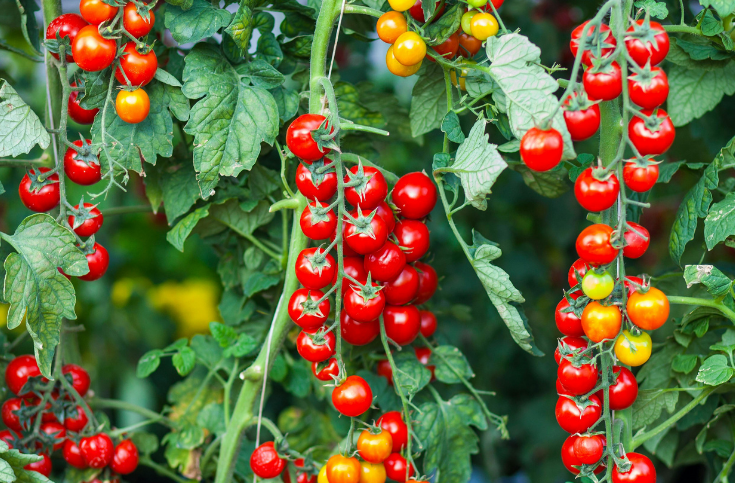
Almost each day with the exception of the Shabat day and of occasional touristic trips, we were driven to our farm early in the morning and worked in the tomato or pepper plantations. The farmer and our group leader would explain to us the details of the jobs we had to do and we would do the physically often tiring work until the early afternoon, enjoying a little coffee break in the late morning and a lunchtime picnic, which we had prepared at home but which also was enriched by bakery products that the farmer brought us and by bananas that we were allowed to take from the farm’s harvest. The farmer and other Israelis working with the farmer, such as biologists advising the farmer on managing fungal diseases, ever so often expressed great gratitude for our volunteer service. Of course, the farmer would ask us about our motivation to use our holiday to come to Israel at such a time and volunteer. So there was a chance to talk about the connection we as Christians feel with this land through the Holy Scripture that we share with the Jewish people. The secular farmer could agree with this. He shared with us that his motivation for farming derives from this land having been promised to Abraham and also been farmed by the forefather. He also explained to us that as a consequence of the October attacks and its monstrosity, his daughters became religious and now observe the Shabat to pray for Israel’s Armed Forces.
Working in the soccer field-sized greenhouse and thereby acquainting myself as a non-agriculturalist with just a wee bit of vegetable farming in Israel, and talking with my fellow volunteers about our experiences helped me much in appreciating the connection between the people, the land of Israel as well as the lands connected with biblical and Israel’s history and its Holy Scriptures. It increased my awareness of the fact that the land as a regional geographical factor and trades associated with it, predominantly agriculture, but also forestry and masonry, for example, figure prominently in the Bible. Covering human life in the Near East during the Copper, the Bronze and the Iron Ageas well as during the Greek and Roman period, the Bible contains 6 many, almost endlessly, narratives and parables that concern agricultural realities.
Whether it is the seeds and fruit trees of Genesis 1 and the forbidden fruit of Genesis 3, whether it is the Olive tree references or parables of Judges 9, Zechariah 4, and Romans 11, whether it is the vineyards of Noah in Genesis 9, the ritual rules for their cultivation in Leviticus 25, the vineyards of Naboth in 1 Kings 21, of King Salomon in the Song of Songs, as a symbol of Israel in Isaiah 5or Ezekiel 17, and as a parable for the Kingdom in God in Jesus’s teachings in the New Testament. There are comparable things to be said about the fig tree and other more or less prominent plants and fruits of the land. Likewise, the harvest is one of the most popular motifs in Jesus’ parables –Matthew 9:37-38, quoted in the epigraph to this article, employs the motif of a lack of harvesters in a spiritual sense. All of Jesus’s contemporary listeners and the early readers of the Gospel of Matthew or Luke (10:2-7) would have been well acquainted with the economic reality and consequences of a lack of farm workers in a semi-arid and arid strip of land that has repeatedly been hit by famines. Many of such motifs in theological teaching were probably well-known to his contemporaries from parts of the Hebrew Bible that already existed, be it in a codified or oral way, for example in the Prophets (e.g. Haggai 1:6).Jesus’s words of a lack of laborers in the harvest very much fitted in with the current real-life situation of this branch of Israel’s economy, however. If there are not enough hands in the harvest, some of it spoils, and the food supplies to the population might not be fully taken care of. At the moment, the harvest is an important part of the wartime effort, and many Israelis volunteer in their spare time.
Having been advised by the organizers ahead of my arrival that I should better bring along rubber boots owing to a preceding very rainy season, one of the kind which the north of Israel had not seen for many years, I was still surprised to make the acquaintance of the very clumpy reddish Israeli soil, even though I was indeed well equipped with such boots. Before experiencing it, I could not believe why this would be such an issue. But unlike much of the soil in Germany, which just gets muddy when getting too much rain, the earth of this land, while getting quickly very sandy and parched when not exposed to precipitation, gets as easily transformed into a clay-like clump that sticks to one’s boots in ways which make it exceedingly hard to scrub and brush it off. The experience quickly made me recall Genesis 3, echoed in Job (10:9 and 33:6), Isaiah (29:16; 41:25; 45,9; 64:8),Jeremiah (18:4-6) and Lamentations (4:2), where man was formed by the Creator from the watered dust of the ground, an elaborate piece of clay into which the breath of life was breathed. The semantics of the Hebrew language emphasize the theology of the biblical narrative: man means adam in Hebrew, which corresponds linguistically to adamah, the earth or soil, and to adom, the red color. This Hebrew word root expresses an important part of the creation story: a reddish-looking, pink-skinned human being is formed out of the red clay of the earth.
Walking through the greenhouse with my boots to which a clump of wet earth got stuck indelibly made me understand why the ancient Hebrews, perhaps with a comparable experience of this Israeli soil, may have narrated the creation story in Genesis in such a way. I am saying this in order to underline how important it is as a Christian believer to get one’s “boots on the ground” of Israel in order to experience aspects of the Bible firsthand and to internalize them into one’s personal faith. I am in no way wanting to engage here in discussions of authorship and editorship of the Torah and creation story or to question its revelational quality by suggesting that my limited personal experience is all that divine purpose and providence encompasses –but it does allow for it and indeed welcomes it, especially when visiting this land.
Yet another lesson for me was the experience of having to take off superfluous individual fruits in order to ensure the healthy growth of the whole tomato plant. Where a vine held a somewhat greater number of tomatoes, including smaller and less ripe ones than others on the same vine, the smaller and greener ones had to be removed so that the more mature fruits would be nourished better and develop even more in their red color and size.
In addition, owing to the surplus of rain, and the untied nylon roof of the greenhouse, the whole tomato plantation we worked in was affected by a fungal disease, which had to be treated very carefully and laboriously. The fungicidal liquid had to be applied manually with a brush to every spot on the branches that was affected by this foulness. Again, I was reminded of certain parables of Jesus, even though they do not refer to tomato plants, of course. In Matthew 7:19 as well as in his parable of the vine and the branches in John 15, Jesus takes natural reality to a spiritual level, talking of the need of pruning branches and removing fruitless ones in order to make the plant more productive. Likewise, the parable of the barren fig tree in Luke 13 witnesses the tree’s owner investing great additional effort to ensure that it will bring forth fruit. It had never occurred to me how relevant both lessons are to my own life. When developing a work project, for example, I might start out broadly to explore all relevant issues. If I do not manage to let go of dimensions that prove unfruitful, I lose the necessary focus to complete the project. So pruning one’s life, one’s “projects” of irrelevant and unhealthy ways and occupations may help to improve the quality of one’s work, life and faith. Where the right focus is found, however, even if not in the visible realm, it may be worthwhile to invest additional effort until the fruit is seen.
During a visit to Jerusalem and a hasty walk through the Old City on the way to the Western Wall before the beginning of Shabbat, I was stopped by an antiquities dealer. At the beginning, I felt really annoyed by this interruption of my plans, and responded to the importunate man impolitely. Nonetheless, for some reason I ended up following his invitation to his shop a few streets around the corner from where I was. After showing me lots of letters and certificates of gratitude by many leading theologians, archeologists, museums and political leaders from around the world, to whom his late father and he have been supplying antique items, he presented me with various Greek, Roman and Jewish coins that were in use during Jesus’s time, as well as clay lamps, arrows and pieces of weapons, and related stuff. I repeated again and again that I had no intention whatsoever of purchasing anything, but I enjoyed the lesson that I took for myself of having to pay more attention to historical details when reading the Bible. The size and weight of a coin and its value, the faces and symbols imprinted on it, come with along with a kind of broader meaning to them, at least to a historical audience. As a reader today, we often grapple with taking hold of that specific significance. The tiny widow’s coin is different from Caesar’s coin and from the Temple silver coin. The New Testament refers to these coins in different contexts, each associated with different social and financial functions and implying specific spiritual meaning. Once I held these coins in my hands and felt and saw their difference, I realized that there is much more in the Bible than I normally pay attention to in my reading or that I get explained in church sermons and Bible study expositions. The clay stuff and lamps in his shop led me off to a different train of thought as they made me think of Jesus’s parable in Matthew 25 (1-13) of the wise virgins who took care of additional oil for their lamps (see also Luke 12:35). Isaiah 62: 1 states that “For Zion’s sake will I not hold my peace, and for Jerusalem’s sake I will not rest, until the righteousness thereof go forth as brightness, and the salvation thereof as a lamp that burneth” (KJV). Is it possible that the “burning lamps” of the five faithful virgins are linked by imagery and symbolism to Isaiah’s “lamp that burns”, demonstrating Israel’s salvation? This would imply that the wise virgins are distinguished from their five foolish counterparts without enough oil by their being grounded in the salvation of Israel. It is a suggestion that cannot be fully explored here, of course.
My present report is not meant as a call for everyone to become a harvest volunteer or to study theology or archeology. It is, however, a call for everyone –literally, really –to visit Israel, be it as a volunteer, tourist or student. You will be surprised that almost invariably, some kind of learning process, including to some degree of theology and Jewish history, will set in and take you over. The Bible will come alive to you. Being exposed to historical and present realities of Judaism and Christianity and the people in the land and its eternal capital Jerusalem, where it all began and where it all continues, where the Kingdom of God was envisioned and prophesied by the ancient patriarchs, kings and prophets, where it became manifest in Messiah Jesus, and where it will one day be fulfilled and completed, through God’s servant Israel and the “faithful virgins” of the church, resulting in the rule of God from Jerusalem, will likely forever change your faith, your life, refresh your understanding of Scripture, offering you a renewed purpose in life. Likewise, getting to know some of the realities of modern Israel and the Middle East will help you better appreciate the delicate situation of the Jewish state today. You may join the AMI Center or whatever other group you can trust for an unforgettable and transformative experience of visiting Israel, or get in touch with an organization supporting volunteering in Israel if that is what you wish to pursue.